
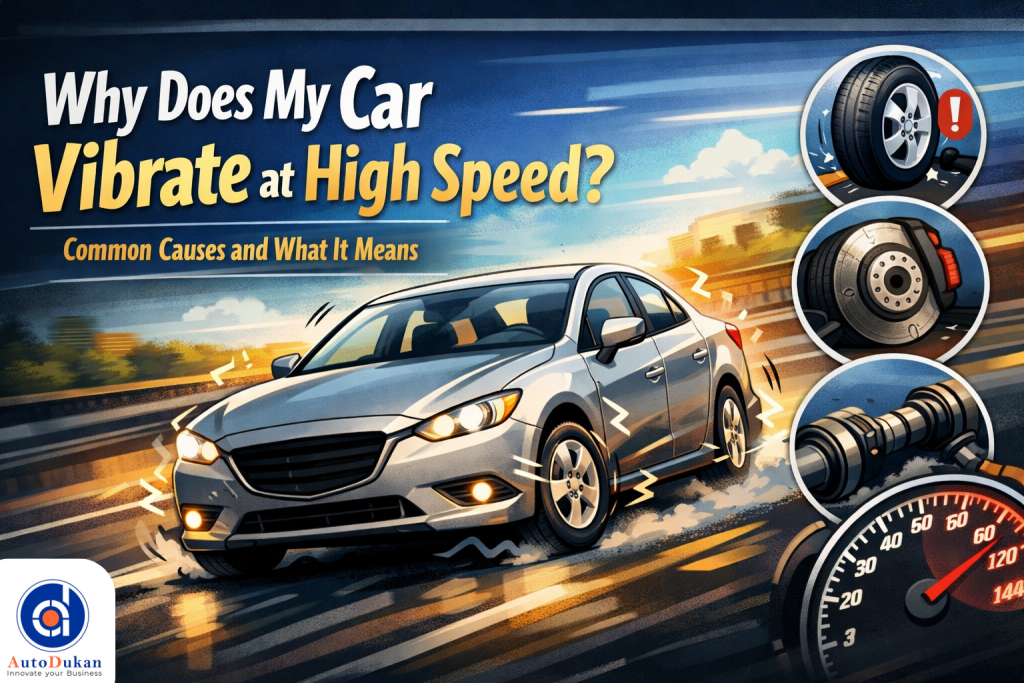
A car that feels perfectly normal in city traffic but starts vibrating on the highway is sending a clear mechanical signal. When a car vibrates at high speed, the cause is rarely random. It usually points to imbalance, wear, or alignment issues that only show up once rotational forces increase. Ignoring it often turns a manageable fix into a costly repair.
Why A Car Vibrates At High Speed On Indian Roads
At low speeds, tyres, wheels, and driveline components rotate slowly enough for small imperfections to stay hidden. As speed increases, those imperfections multiply into noticeable vibration.
This is why many drivers report the issue only above 80 or 90 kmph. The car is not suddenly developing a fault. The fault was already there, but speed exposes it.
Wheel Balancing Issues Are The Most Common Cause
The most frequent reason a car vibrates at high speed is poor wheel balancing. Even a few grams of imbalance can cause the wheel to wobble once it spins faster.
Common triggers include:
- Lost wheel weights
- Improper balancing during tyre change
- Uneven tyre wear
The vibration usually increases smoothly with speed and is often felt through the steering wheel or seat depending on which wheel is affected.
Tyre Deformities And Uneven Wear
Tyres do not always wear evenly. Flat spots, sidewall bulges, or internal belt damage can all cause vibration that becomes obvious at highway speeds.
Indian roads contribute heavily to this problem. Potholes, hard braking, and underinflation deform tyres over time. Even if tread depth looks acceptable, internal damage can still exist.
Rotating tyres late or skipping alignment accelerates this wear pattern.
Bent Wheels And Impact Damage
Hitting potholes or road edges at speed can bend alloy or steel wheels. Minor bends are hard to see with the naked eye but cause noticeable vibration when the wheel spins faster.
This type of vibration often feels rhythmic and does not improve even after balancing. In such cases, wheel inspection and runout testing are necessary.
Also Read: How India’s Weather Damages Cars Heat Dust Humidity and Pollution Explained
Suspension And Steering Component Wear
Worn suspension or steering parts allow excessive movement at speed. Bushings, ball joints, tie rod ends, and strut mounts lose stiffness over time.
At higher speeds, this looseness turns into vibration or shimmy. The car may also feel unstable during lane changes or braking.
These issues are common in cars that regularly drive on rough roads or carry heavy loads.
Brake Related Vibrations That Show Up At Speed
If vibration appears mainly while braking from high speed, warped brake discs are a strong possibility. Heat buildup during repeated braking can cause uneven disc surfaces.
This vibration is usually felt through the steering wheel and brake pedal. Ignoring it leads to faster pad wear and reduced braking confidence.
Drivetrain Issues In Rear Wheel And All Wheel Drive Cars
In some vehicles, especially rear wheel drive or all wheel drive cars, worn prop shafts or universal joints can cause vibration at speed.
These vibrations often increase under acceleration and reduce when coasting. Diagnosis requires experience, as the symptoms can mimic wheel related issues.
What The Vibration Is Telling You
High speed vibration is a warning, not a comfort issue. It signals stress on tyres, bearings, suspension, and steering components. Driving long distances without fixing it increases wear across multiple systems.
Early diagnosis usually means a simple balance, alignment, or part replacement. Delay often means tyres, suspension, and steering components failing together.
How Workshops Should Approach Diagnosis
Workshops should avoid jumping to conclusions. A structured check works best:
- Inspect tyres visually and for uneven wear
- Check wheel balance and alignment
- Inspect suspension and steering joints
- Test drive to confirm source
Accurate diagnosis depends heavily on correct part replacement. Using incompatible or low quality parts can introduce new vibrations instead of solving the original problem.
We support garages through our online spare parts platform for workshops, helping them source verified OEM components with clear compatibility. This reduces repeat visits caused by incorrect parts and guesswork. Workshops also rely on our reliable spare parts sourcing for garages to maintain consistency across repairs.
Also Read: 10 DIY Car Maintenance Tasks You Can Do at Home (No Mechanic Needed)
Conclusion
When a car vibrates at high speed, it is revealing a mechanical imbalance that should not be ignored. The faster the car goes, the louder the problem becomes.
We help workshops diagnose and fix vibration complaints correctly by offering verified OEM spare parts, accurate compatibility, and dependable deliveries so issues are resolved once, not repeatedly.
FAQs
Is it safe to drive if my car vibrates at high speed?
It increases wear and risk. The cause should be checked quickly.
Can wheel balancing alone fix high speed vibration?
Often yes, but only if tyres and suspension are healthy.
Does alignment cause vibration at high speed?
Indirectly. Poor alignment leads to uneven tyre wear which then causes vibration.