
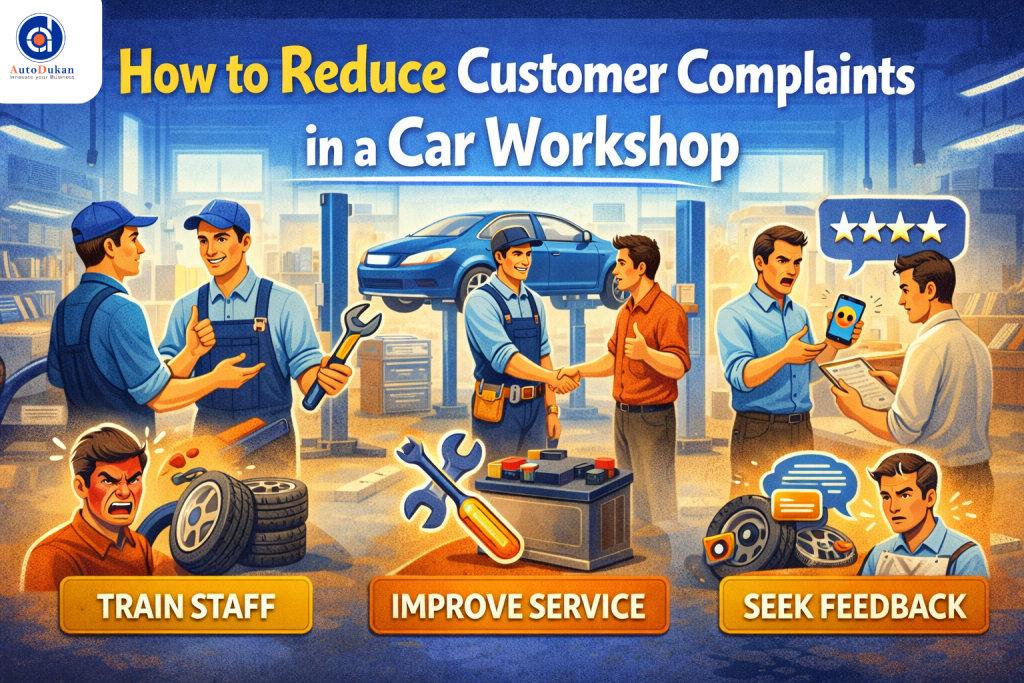
Customer complaints rarely appear suddenly. In most cases, they are the result of small issues that accumulate during the repair process. Miscommunication, unclear estimates, delayed delivery, and repeat failures gradually erode customer trust.
For workshop owners, understanding how to reduce customer complaints in a car workshop is not only about improving service quality. It is about designing processes that prevent dissatisfaction before it begins.
Workshops that consistently reduce complaints usually focus on four areas: diagnosis accuracy, communication clarity, delivery reliability, and part quality.
Most Complaints Begin With Incomplete Diagnosis
Many customer complaints originate from repairs that do not fully resolve the problem. A vehicle may return within days with the same issue, or a related issue may appear after the repair.
This usually happens when the root cause is not properly identified. For example, replacing a suspension component without checking surrounding bushings or links may temporarily reduce noise but fail to address the underlying wear pattern.
When workshops prioritise quick fixes instead of complete diagnosis, customers perceive the repair as ineffective. Over time this creates a reputation problem even if the technician’s intent was to help quickly.
A structured diagnostic approach reduces repeat visits and increases customer confidence.
Poor Communication Creates More Frustration Than High Bills
Customers often accept expensive repairs if they understand the reason behind them. What frustrates them most is uncertainty.
If a workshop begins work without clearly explaining the issue, the estimated cost, and the expected timeline, customers feel blindsided when the final bill arrives.
Simple practices can prevent this. Explaining the fault in clear language, sharing estimated costs before beginning work, and updating the customer if additional issues appear during inspection builds transparency.
Customers rarely complain about repairs they fully understand.
Delivery Delays Damage Trust Quickly
Another common complaint occurs when promised delivery timelines are missed. Workshops often underestimate repair time or face unexpected part delays.
From a customer perspective, the issue is rarely the delay itself. The frustration usually comes from not being informed early enough.
When workshops proactively communicate delays and explain the reason clearly, customers remain cooperative. Silence creates the impression of disorganisation.
Reliable workflow planning and realistic delivery commitments help reduce this problem significantly.
Also Read: How to Manage Multiple Cars Efficiently in a Small Garage Environment
Parts Quality Directly Affects Customer Satisfaction
One of the fastest ways to generate complaints is repeat failure after repair. If a replaced component fails again within a short period, customers lose confidence in the workshop.
This problem often occurs when incorrect or low quality parts are installed. Even slight compatibility issues can cause noise, vibration, or performance problems.
Using reliable parts and confirming compatibility before installation ensures the repair actually resolves the issue instead of creating new ones.
Also Read: Why Spare Parts Do Not Fit Even for the Same Car Model in India
Clear Billing Prevents Misunderstandings
Billing disputes are another frequent cause of complaints. When customers do not understand the breakdown of labour, parts, and additional work performed, they often assume they are being overcharged.
Providing a clear invoice that lists each component and service performed prevents confusion. Transparency in billing reinforces the perception that the workshop operates professionally.
Consistency Builds Long Term Customer Trust
Reducing complaints is not about solving one issue. It is about creating consistent service experiences.
Workshops that diagnose problems accurately, communicate clearly, deliver on time, and install reliable parts gradually build a reputation for trust. Over time, customers become more patient and cooperative because they know the workshop prioritises quality.
Where Reliable Parts Support Better Service Outcomes
Many customer complaints originate from repeat failures caused by incorrect parts or poor compatibility. Using verified components helps workshops complete repairs correctly the first time.
Autodukan enables workshops to source genuine OEM spare parts with accurate compatibility and transparent pricing. This reduces fitment errors and ensures repairs meet customer expectations.
Conclusion
Understanding how to reduce customer complaints in a car workshop begins with recognising why customers become dissatisfied. Most complaints originate from incomplete diagnosis, unclear communication, delayed delivery, or incorrect parts.
Workshops that focus on structured processes and transparent service delivery create fewer problems and build stronger long term relationships with customers.
FAQs
Why do customers complain about car workshops?
Common reasons include repeat repairs, unclear billing, and delayed delivery.
How can workshops reduce repeat complaints?
Accurate diagnosis, clear communication, and reliable parts reduce repeat issues.
Does parts quality affect customer satisfaction?
Yes. Incorrect or low quality parts often lead to repeat failures and complaints.