
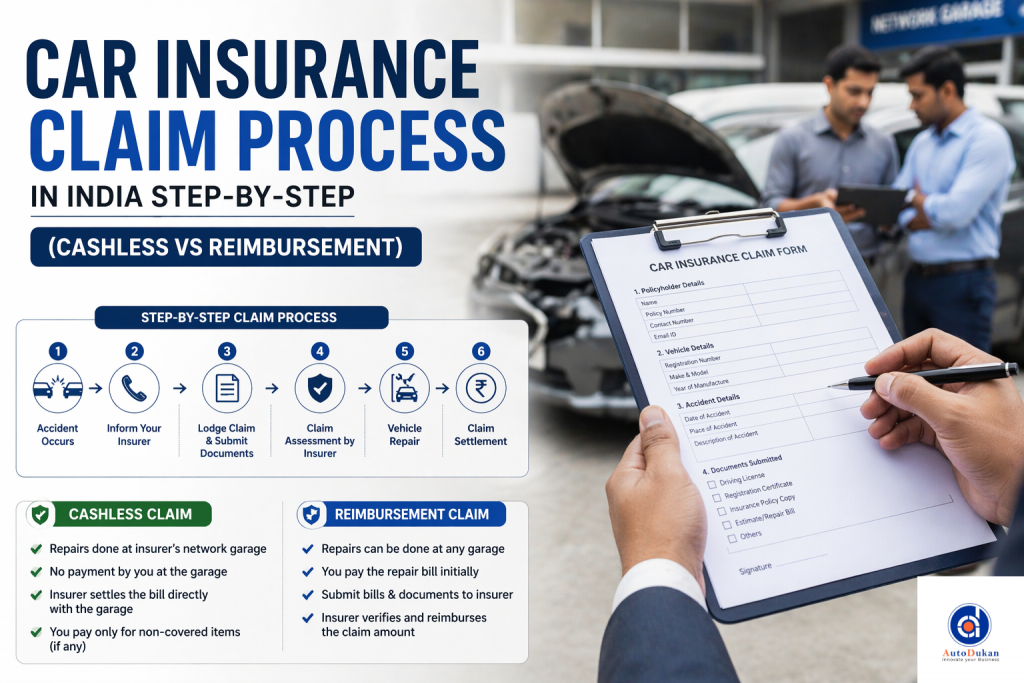
Insurance claims look simple on paper but become confusing the moment damage actually happens. Delays, rejections, and partial approvals are common not because insurers are unfair, but because the process is misunderstood or handled incorrectly.
Understanding the car insurance claim process in India step by step helps both car owners and workshops avoid delays, rework, and unexpected out of pocket costs.
Step 1: Immediate Intimation Is Not Optional
The first step after an accident or damage is informing the insurer. This is where many claims fail.
Delay in intimation creates:
- Doubt about damage timing
- Documentation gaps
- Higher chances of rejection
Most insurers expect intimation within 24 hours. Even if full details are not available, initial reporting should be done immediately.
Step 2: Do Not Start Repairs Before Survey
One of the most critical rules in insurance claims is this.
Do not start repairs before surveyor inspection.
The surveyor’s role is to:
- Verify damage
- Estimate cost
- Approve claim amount
If repairs are started before inspection, insurers may reject or reduce the claim. This is one of the most common mistakes both customers and workshops make.
Step 3: Choose Between Cashless And Reimbursement
There are two claim routes.
Cashless
- Done at network garage
- Insurer settles bill directly with workshop
- Customer pays only non covered parts
Reimbursement
- Customer pays full amount upfront
- Claim is settled later after document submission
Cashless is simpler, but only available at approved garages. Reimbursement gives flexibility but requires more documentation and follow up.
Step 4: Documentation Must Match The Incident
Claim approval depends heavily on documentation.
Required documents:
- Claim form
- RC copy
- Insurance policy
- Driving license
- FIR if required
- Repair estimate
The key issue is consistency.
If the description of damage, photos, and estimate do not align, the claim may be questioned or reduced.
Also Read: Why Insurance Claims Get Rejected in India and How to Avoid It
Step 5: Repair Approval And Work Execution
Once the surveyor approves the estimate, repairs can begin.
However, approval may not cover:
- Depreciation
- Consumables
- Certain parts
Workshops must clearly explain:
- What is covered
- What customer will pay
Lack of clarity here leads to disputes at delivery stage.
Step 6: Final Billing And Claim Settlement
In cashless claims:
- Workshop submits final bill
- Insurer pays approved amount
- Customer pays balance
In reimbursement:
- Customer submits final documents
- Insurer processes payment
Delays usually happen due to:
- Missing documents
- Mismatch in estimate and final bill
Where Most Claims Go Wrong
Claims are rarely rejected randomly. Common reasons include:
- Late intimation
- Repairs before survey
- Incorrect documentation
- Policy coverage misunderstanding
Each of these is avoidable with proper process awareness.
Why Workshops Play A Critical Role
Customers often rely on workshops to guide them through claims.
Workshops that:
- Prepare clear estimates
- Follow survey protocols
- Maintain documentation
see faster approvals and fewer disputes.
Also Read: How to Handle Customer Complaints in a Car Workshop
Where Parts Accuracy Affects Claim Outcomes
Incorrect or mismatched parts can create issues during claim approval.
AutoDukan helps workshops ensure accurate part selection with genuine OEM components and transparent pricing. This reduces estimate mismatches and improves claim approval consistency.
Conclusion
The car insurance claim process in India is structured but sensitive to errors. Small mistakes at early stages can delay or reduce claim settlement.
Understanding the process, following correct steps, and maintaining documentation clarity ensures smoother claims and fewer disputes.
FAQs
Can I start repair before survey?
No, it can lead to claim rejection or reduction.
What is better; cashless or reimbursement?
Cashless is simpler, reimbursement offers flexibility.
Why do claims get delayed?
Mostly due to document mismatch or late intimation.