
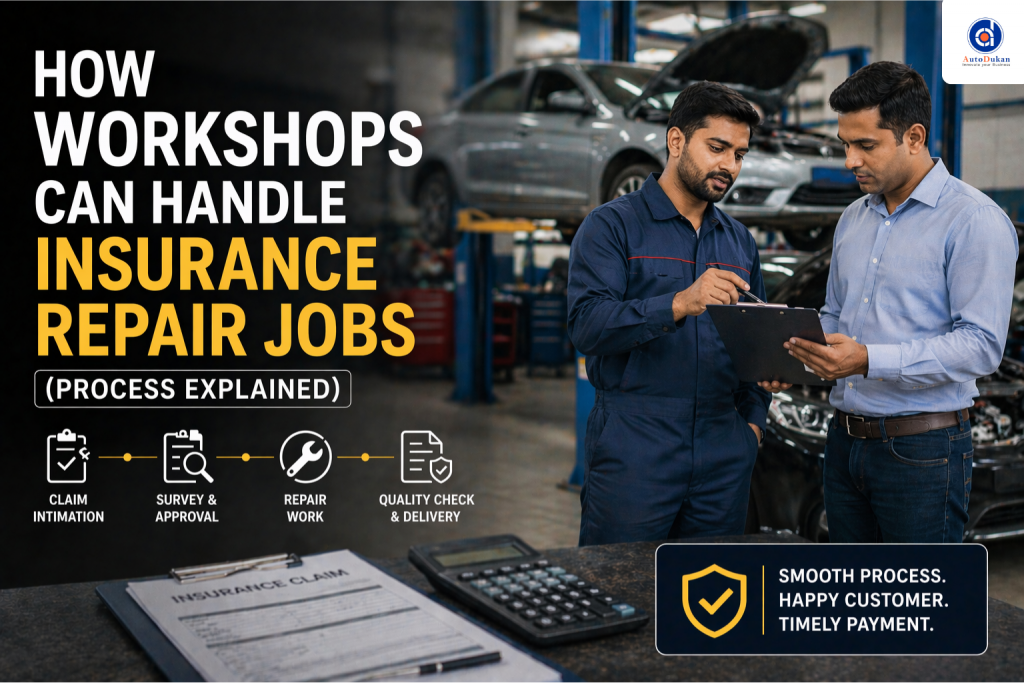
Insurance repair jobs are not just technical work. They are process driven. Workshops that treat them like regular repairs often face delays, claim cuts, and customer disputes.
Handling insurance jobs efficiently requires coordination between customer, insurer, and workshop. The difference between a smooth claim and a problematic one usually comes down to process discipline.
Understanding the insurance repair process in car workshop helps reduce delays, improve approvals, and maintain customer trust.
Step 1: Job Intake Must Capture Full Context
When a car arrives for insurance repair, the first step is not opening the vehicle. It is understanding the incident.
Workshops should record:
- Type of damage
- When it occurred
- Whether claim is already initiated
This ensures documentation later matches the claim details. Mismatch at this stage often creates problems during approval.
Step 2: Prepare A Clean And Logical Estimate
The estimate is the foundation of the claim.
A good estimate:
- Clearly lists damaged parts
- Separates labour and parts
- Matches visible damage
Overestimating raises red flags. Underestimating leads to revisions and delays.
Surveyors rely heavily on how structured and realistic the estimate is.
Step 3: Coordinate Survey Without Delay
Survey is the most critical checkpoint.
Workshops should:
- Inform insurer immediately
- Schedule survey quickly
- Ensure vehicle is in inspectable condition
Delays in survey push the entire timeline forward and frustrate customers.
Step 4: Do Not Dismantle Beyond Visible Damage
A common mistake is dismantling parts before survey approval.
Surveyors assess:
- Visible damage
- Supporting evidence
If parts are removed prematurely, it becomes harder to justify the claim.
Only proceed after approval or with surveyor consent.
Step 5: Manage Supplementary Approvals Carefully
Once repair begins, hidden damage may appear.
This requires:
- Revised estimate
- Additional approval
Workshops must document this properly with photos and explanation. Poor documentation here often leads to partial claim approval.
Step 6: Communicate Coverage Clearly To Customer
Not all parts are covered fully.
Customers should be informed about:
- Depreciation
- Non covered items
- Deductibles
If this is not explained early, disputes happen at delivery stage.
Also Read: How to Avoid Customer Disputes in Car Workshop Billing
Step 7: Execute Repair With Accuracy
Once approved, execution should follow the estimate closely.
Using incorrect parts or deviating from approved work can:
- Delay claim
- Cause rejection
- Create rework
Process discipline continues even during repair.
Step 8: Final Billing And Claim Closure
At completion:
- Final bill must match approved estimate
- Documents must be complete
- Claim file should be clean
In cashless cases, insurer pays directly. In reimbursement, customer submits documents.
Delays at this stage usually come from mismatched paperwork.
Where Workshops Lose Efficiency
Most inefficiencies in insurance jobs come from:
- Poor estimates
- Delay in survey coordination
- Weak documentation
- Incorrect parts
Each of these creates rework and delays.
Where Accurate Parts Improve Claim Flow
Part accuracy directly affects estimate approval and final billing.
AutoDukan helps workshops source genuine OEM spare parts with accurate compatibility and transparent pricing. This ensures estimates are realistic, approvals are smoother, and repairs match claim expectations.
Conclusion
Insurance repair jobs are process heavy, not just repair heavy. Workshops that follow structured steps from intake to delivery handle claims faster and with fewer disputes.
Clear documentation, accurate estimates, and disciplined execution turn insurance jobs from a problem area into a reliable revenue stream.
FAQs
Can workshops start repair before survey?
No, it can lead to claim issues.
Why are insurance jobs delayed?
Mostly due to estimate mismatch and documentation gaps.
What is supplementary approval?
Approval for additional damage found during repair.