
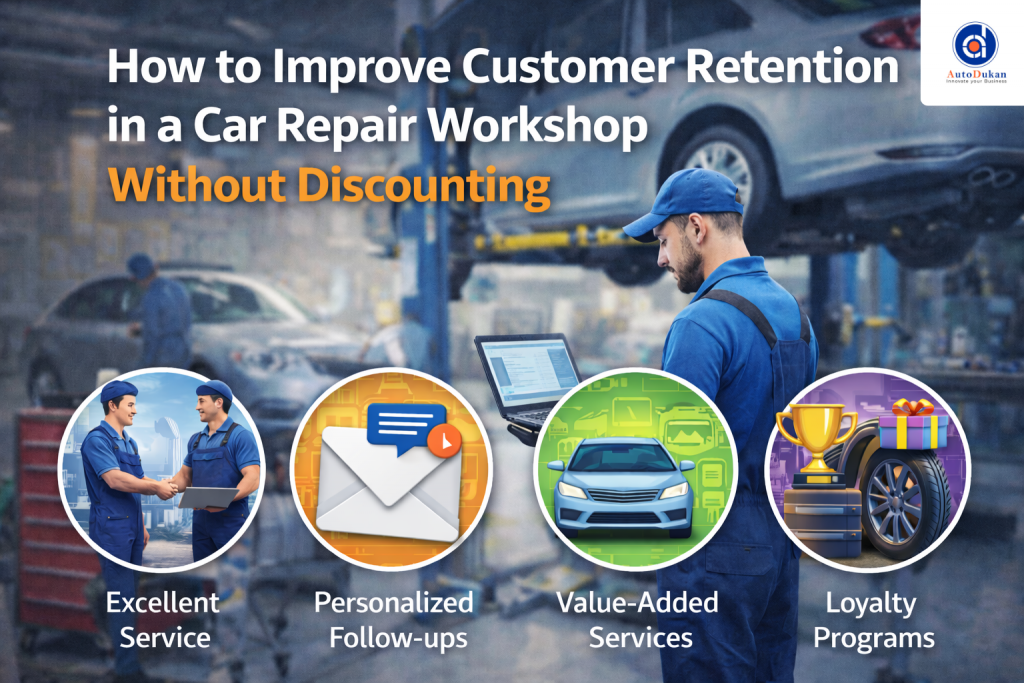
Discounts may bring customers once, but they rarely bring them back. In Indian car repair workshops, retention is driven far more by trust, consistency, and experience than by price cuts. Customers return to garages where problems are fixed properly, timelines are respected, and surprises are avoided.
Workshops that focus only on attracting new customers often overlook the easier win. Keeping existing ones.
Why Discounts Hurt Long Term Retention
Discounts train customers to wait for the next offer. They also compress margins, forcing workshops to rush jobs or compromise on parts and processes.
Over time, this leads to inconsistent repairs, repeat complaints, and a reputation that revolves around price instead of reliability. Retention built on discounts is fragile and short lived.
Fix It Right The First Time
Nothing builds loyalty like a repair that does not come back. Customers remember when a problem is solved properly and does not reappear after a few weeks.
Repeat failures usually come from rushed diagnosis or incorrect parts. Workshops that take time to diagnose thoroughly and use correct replacement parts reduce comebacks and build long term trust.
Be Clear Before The Job Starts
Customers dislike uncertainty more than cost. A clear explanation of what needs fixing, why it needs fixing, and what it will roughly cost makes a big difference.
Even if the repair is expensive, transparency reduces friction. Sudden additions to the bill or unexplained delays are among the biggest reasons customers do not return.
Respect Timelines And Communicate Delays
Delivery timelines matter. If a car is promised by evening, it should be ready or the customer should be informed early.
Most customers are reasonable when delays are explained in advance. Silence creates frustration. Simple updates through calls or messages go a long way in building confidence.
Maintain Records And Remember The Car
Customers feel valued when workshops remember their vehicle history. Past repairs, recurring issues, and previous part replacements help deliver more accurate service.
This also improves diagnosis and avoids repeating unnecessary work. Workshops that maintain basic service records appear more professional and reliable.
Use Quality Parts To Avoid Repeat Visits
Customers may not understand part brands, but they understand outcomes. A car that runs smoothly after repair earns trust.
Using low quality or incompatible parts leads to noise, failure, or performance issues that send the customer elsewhere next time. Quality parts protect the workshop’s reputation more than any discount ever can.
How Consistency Builds Loyalty Over Time
Retention is rarely about one big gesture. It is built through small, consistent actions. Honest advice, clean work, predictable outcomes, and respectful communication create familiarity.
Once customers feel confident leaving their car with a workshop, they stop comparing prices and start valuing peace of mind.
Where The Right Parts Support Retention
Many retention issues originate from repeat failures and delays caused by wrong or poor quality parts. Autodukan helps workshops avoid this by enabling access to genuine OEM spare parts with accurate compatibility. We have catalogued 5cr+ parts across 2k+ car variants so garages can match exact fitment without guesswork. With transparent pricing and dependable delivery, workshops can deliver consistent service quality that customers trust.
Conclusion
Retaining customers in a car workshop does not require discounts. It requires reliability, clarity, and consistency. Workshops that fix issues correctly, communicate clearly, and respect customer time build loyalty naturally.
When customers trust the repair outcome, they return without being asked and recommend the garage to others.
FAQs
How can a car workshop retain customers without discounts?
By fixing issues correctly, communicating clearly, and delivering on time.
Do customers care more about price or quality?
Long term customers value quality and reliability more than discounts.
How do wrong parts affect customer retention?
They cause repeat failures and delays, leading customers to switch garages.