
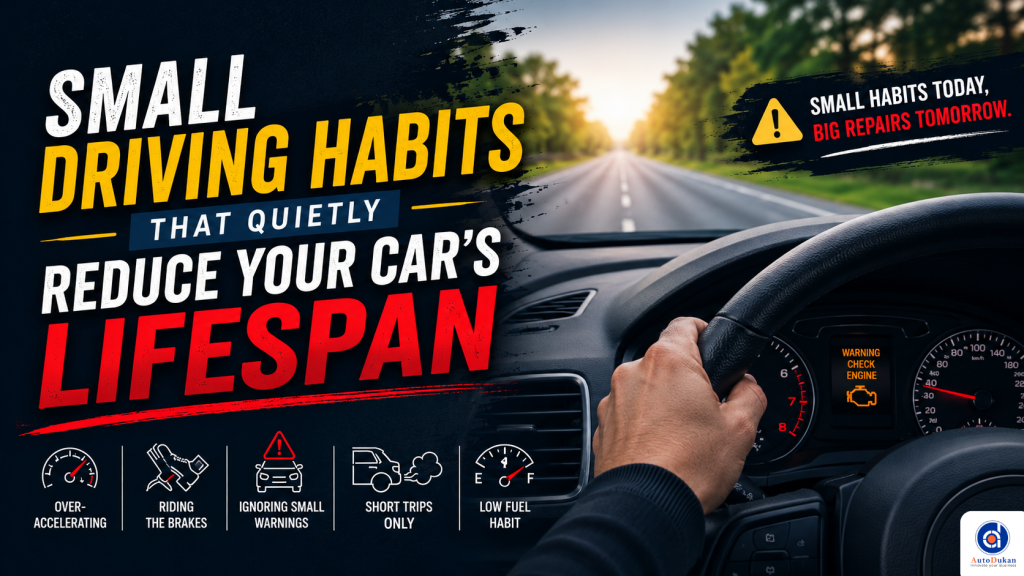
Most car damage does not come from major accidents or obvious neglect. It comes from small daily habits repeated hundreds of times. These habits feel normal because the car keeps running, but internally they accelerate wear on the engine, suspension, brakes, clutch, and transmission.
That is why many cars start showing expensive problems much earlier than expected even when they appear to be “well maintained.”
Understanding the driving habits that damage your car helps prevent slow mechanical deterioration that owners usually notice too late.
Riding The Clutch Shortens Clutch Life Rapidly
Keeping your foot lightly on the clutch pedal while driving is one of the most common habits in city traffic.
Even slight pressure partially engages the clutch release bearing and creates constant friction. This increases heat and wears the clutch plate faster than normal.
A healthy clutch should engage cleanly with no burning smell and smooth acceleration. Early signs of wear include delayed pickup, engine revving without matching speed increase, and a heavier clutch pedal.
Many drivers blame clutch failure on age when the real cause is years of clutch riding.
Ignoring Speed Breakers Damages Suspension Quietly
Driving fast over speed breakers or potholes does not always create immediate visible damage, which is why people underestimate it.
The real damage happens in suspension bushings, struts, control arms, and alignment geometry. Repeated hard impacts loosen mounting points and accelerate tyre wear.
If the car starts making dull knocking sounds over bumps or the steering feels slightly unstable, suspension wear may already be developing.
Also Read: Why Does My Car Pull to One Side While Driving? Alignment, Tyres, or Something Else
Driving On Low Fuel Hurts More Than Mileage
Many drivers regularly wait until the fuel warning light becomes routine.
This increases strain on the fuel pump because it relies partly on fuel for cooling. Repeated low fuel driving can overheat the pump and pull sediment from the tank into the fuel system.
The result is poor starting, injector issues, and reduced fuel efficiency over time.
Low fuel should be treated as an exception, not a normal driving pattern.
Hard Acceleration On Cold Starts Wears The Engine Faster
The first few minutes after startup are critical for engine lubrication.
Engine oil takes time to circulate fully, especially after overnight parking. Aggressive acceleration immediately after starting increases friction before proper lubrication is established.
This causes long term wear in pistons, bearings, and valve train components.
A better habit is allowing gentle driving for the first few kilometres instead of aggressive revving.
Resting Hand On Gear Lever Affects Transmission
This seems harmless but creates unnecessary pressure on the selector forks inside the gearbox.
Over time, constant hand pressure causes premature wear in internal transmission components.
Gear shifts should be intentional, not constant contact. Small habits like this create expensive gearbox wear that feels unrelated later.
Braking Late Creates More Than Brake Wear
Frequent hard braking generates excessive heat in brake pads and discs, reducing braking efficiency and increasing wear.
But the effect goes beyond brakes. Sudden braking transfers stress to tyres and suspension repeatedly, reducing overall stability.
Smooth braking improves safety and significantly reduces component wear.
Turning Steering Fully And Holding It There
Holding the steering wheel fully turned for several seconds puts extra pressure on the power steering system.
This increases strain on the steering pump and fluid pressure seals. Over time, it may lead to steering noise or pump wear.
The steering should return slightly after full lock instead of being held under maximum pressure.
Delaying Small Noises Creates Big Repairs
Many major repairs begin as a small sound that gets ignored.
A slight suspension knock, belt chirp, or vibration during braking often signals early failure. Waiting until the issue becomes obvious usually means additional parts are already affected.
Early inspection is always cheaper than delayed repair.
Where Correct Parts Prevent Habit Related Damage From Escalating
Daily wear cannot be avoided completely, but correct repairs prevent small issues from turning into repeated failures.
AutoDukan helps workshops and car owners source genuine OEM spare parts with accurate compatibility so repairs restore proper performance instead of creating new problems. This is especially important for suspension, clutch, brake, and steering components where precision matters most.
Conclusion
The driving habits that damage your car are usually small, repeated, and easy to ignore. Riding the clutch, hitting potholes hard, driving on low fuel, and aggressive cold starts all reduce lifespan quietly.
Cars last longer not only because of servicing, but because of how they are driven every day. Small habits create either long term reliability or expensive repairs.
FAQs
Does riding the clutch really damage the car?
Yes, it creates constant friction and shortens clutch life significantly.
Is driving on low fuel bad for the engine?
It mainly affects the fuel pump and fuel delivery system.
Why should I avoid hard acceleration after starting?
Because engine oil needs time to circulate fully and protect components.