
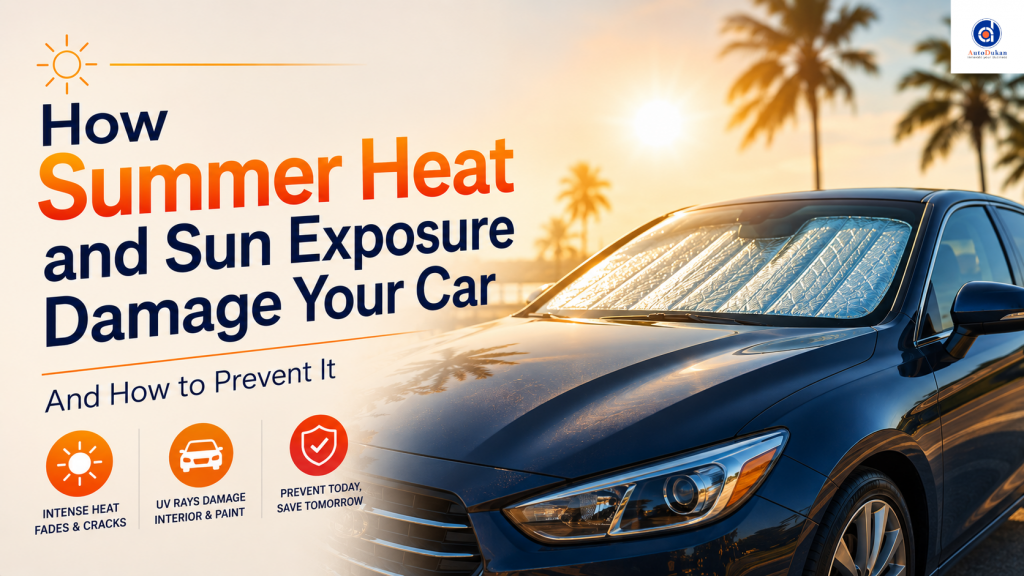
Most drivers notice summer discomfort inside the cabin, but the real damage often happens where it cannot be seen. High temperatures affect batteries, tyres, fluids, paint, plastics, and even electronic components.
Unlike a pothole impact or accident, heat damage develops gradually. By the time symptoms appear, wear has often been accumulating for months.
Understanding how to protect car from summer heat helps prevent premature ageing and expensive repairs.
Your Car Is Often Hotter Than You Think
On a typical summer day, cabin temperatures can become significantly higher than the outside temperature.
While drivers focus on the discomfort of entering a hot car, materials inside are dealing with something more serious:
- Dashboard plastics expand and contract repeatedly
- Upholstery loses moisture
- Adhesives weaken
- Electronic components operate under higher thermal stress
Repeated heat cycles accelerate ageing even if the car appears normal.
Tyres Suffer More During Summer Driving
Tyres are designed to operate within specific temperature ranges.
As temperatures rise:
- Air pressure increases
- Rubber becomes softer
- Wear accelerates faster
Many drivers make the mistake of checking tyre condition only by tread depth.
What to actually look for:
- Small cracks near sidewalls
- Uneven shoulder wear
- Bulges or deformation
These signs often appear earlier during hot weather.
Heat combined with underinflation is particularly dangerous because it increases sidewall flex and heat generation simultaneously.
Battery Failures Often Begin In Summer
Many people associate battery problems with winter. In India, summer is often harder on batteries.
Heat accelerates chemical reactions inside the battery, which gradually reduces lifespan.
Warning signs include:
- Slower cranking
- Dimming lights during startup
- Corrosion around terminals
A battery may continue functioning after summer damage, only to fail unexpectedly months later.
Engine Fluids Break Down Faster
Engine oil, coolant, brake fluid, and transmission fluid all work harder in high temperatures.
For example:
- Engine oil thins faster under sustained heat
- Coolant loses effectiveness over time
- Brake fluid absorbs moisture and experiences higher thermal stress
Many overheating complaints are not caused by extreme temperatures alone. They happen because ageing fluids can no longer manage those temperatures effectively.
Paint Damage Is More Than Cosmetic
Ultraviolet exposure slowly damages paint protection layers.
Early signs include:
- Reduced gloss
- Faded colour intensity
- Uneven reflections
Darker coloured vehicles typically show this sooner because they absorb more heat.
Once oxidation becomes visible, restoring the finish becomes significantly more expensive than preventing it.
Interior Materials Age Faster In Direct Sunlight
The dashboard often receives the most attention, but it is not the only component affected.
Summer exposure accelerates ageing of:
- Seat materials
- Door trims
- Steering wheel surfaces
- Rubber seals
A healthy interior surface remains flexible and consistent in texture.
Heat damaged materials often become:
- Dry
- Brittle
- Discoloured
Also Read: Easy Car Interior Cleaning Habits That Keep Your Cabin Fresh for Longer
Wiper Blades Quietly Deteriorate
Wiper blades are exposed to both sunlight and heat every day.
Many drivers discover the problem only during the first rain when the blades begin:
- Smearing
- Skipping
- Leaving streaks
Summer is often when wiper deterioration actually begins.
Parking Habits Make A Bigger Difference Than Most People Think
One of the simplest ways to reduce heat damage is improving where and how the car is parked.
Helpful habits include:
- Choosing shaded parking when available
- Using windshield sunshades
- Slightly ventilating the cabin when safe to do so
These small actions reduce long term stress on both interior and exterior components.
Prevention Is Cheaper Than Heat Damage Recovery
Many summer related issues develop slowly enough to be ignored.
The challenge is that heat rarely damages only one component. It accelerates wear across multiple systems simultaneously.
Regular inspection of:
- Tyres
- Battery
- Fluids
- Cooling system
- Interior materials
helps identify problems before they become expensive repairs.
Where Preventive Maintenance Matters Most
Summer places additional stress on parts that are already ageing.
AutoDukan helps workshops and car owners source genuine OEM spare parts with accurate compatibility so cooling system components, batteries, filters, and other heat affected parts can be replaced correctly before failure occurs.
Conclusion
Learning how to protect your car from summer heat is not just about comfort. It is about reducing long term wear across multiple vehicle systems.
Tyres, batteries, fluids, paint, and interior materials all age faster under sustained heat exposure. Small preventive habits and timely maintenance help keep the vehicle reliable, safe, and looking better for longer.
FAQs
Can summer heat damage a parked car?
Yes. Heat and UV exposure affect interiors, paint, tyres, and batteries even when the car is not being driven.
Does hot weather affect tyre pressure?
Yes. Tyre pressure increases as temperature rises and should be monitored regularly.
Why do car batteries fail during summer?
High temperatures accelerate internal chemical degradation and reduce battery lifespan.