
Most car owners worry about wear while driving. Far fewer think about what happens when a car is not driven at all.
Surprisingly, many vehicle problems develop faster during long periods of inactivity than during regular use. Batteries discharge, tyres deform, fuel degrades, moisture accumulates, and rubber components begin ageing without movement.
This is why cars parked for weeks or months often develop unexpected issues despite being used less.
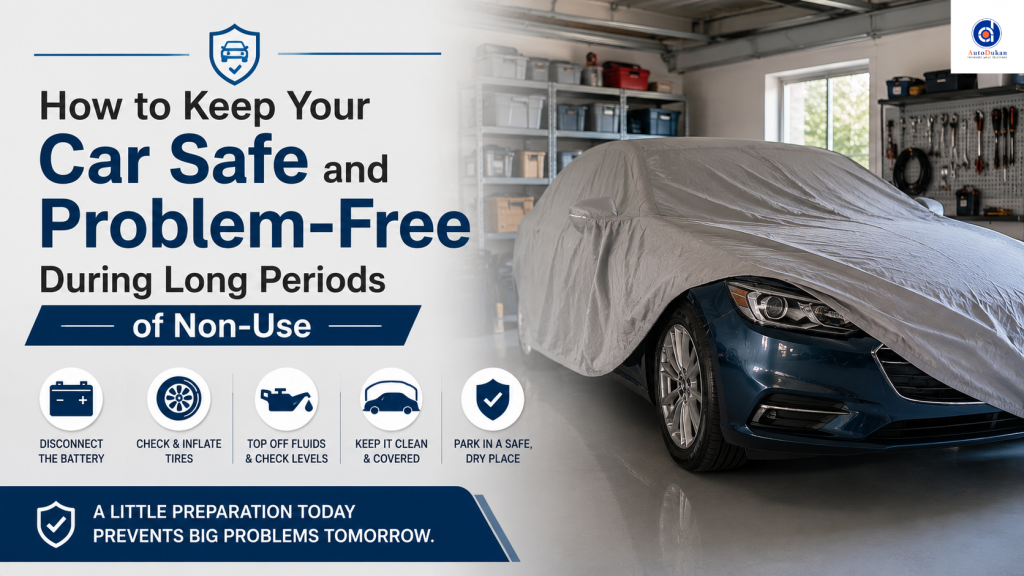
Understanding how to keep your car safe during long periods of non use helps prevent avoidable repairs and ensures the vehicle is ready when needed again.
Why Cars Deteriorate Even When Parked
Vehicles are designed to operate regularly.
When a car sits unused:
- Fluids stop circulating
- Battery charging stops
- Tyres remain under constant load
- Moisture remains trapped longer
Many components depend on regular operation to stay healthy.
The goal is not simply parking the car. The goal is storing it correctly.
Battery Failure Is Usually The First Problem
Modern cars continue consuming small amounts of power even when switched off.
Systems such as:
- Security modules
- Clocks
- Memory settings
slowly drain the battery.
A healthy battery can tolerate inactivity for some time, but prolonged parking often leaves insufficient charge for starting.
If the vehicle will remain unused for several weeks, starting it occasionally and allowing it to reach normal operating temperature helps maintain battery health.
For longer storage, disconnecting the battery may be appropriate depending on the vehicle.
Tyres Develop Problems Long Before They Go Flat
One common misconception is that tyres only need attention when pressure drops.
In reality, tyres supporting the vehicle’s weight in the same position for extended periods may develop flat spots.
This is more likely when:
- Tyre pressure is already low
- Storage duration is long
- Vehicle remains completely stationary
Checking and maintaining recommended pressure before storage significantly reduces the risk.
Fuel Does Not Stay Fresh Forever
Fuel gradually changes during prolonged storage.
Over time:
- Volatile compounds evaporate
- Fuel quality deteriorates
- Deposits may form
The impact is greater when the fuel tank remains nearly empty.
Keeping a reasonable fuel level reduces air space inside the tank and helps limit moisture related issues.
Brakes Can Develop Surface Problems
Brake discs are exposed metal surfaces.
When parked for extended periods, especially in humid conditions, light surface rust develops naturally.
Small amounts usually disappear during normal driving.
However, long term inactivity combined with moisture can create heavier corrosion and uneven braking performance.
Moisture Is Often A Bigger Threat Than Dust
Many owners focus heavily on dust protection while ignoring humidity.
Moisture can affect:
- Electrical connectors
- Interior materials
- Metal components
- Cabin air quality
Signs of moisture related issues include:
- Musty smells
- Fogging inside windows
- Visible mould growth
Proper ventilation and dry parking conditions are often more important than perfect cleanliness.
Do Not Forget The Interior
The cabin continues ageing even when the car is parked.
Long periods of inactivity can lead to:
- Interior odours
- Dust accumulation
- Material drying
- Heat related deterioration
Also Read: Easy Car Interior Cleaning Habits That Keep Your Cabin Fresh for Longer
Simple preventive measures such as cleaning before storage and removing food residue help significantly.
Short Starts Can Sometimes Do More Harm Than Good
Many owners start the engine briefly every few days thinking it helps.
Not necessarily.
Starting the engine without allowing it to reach operating temperature may:
- Increase condensation
- Leave moisture in the exhaust system
- Provide limited battery charging
If the car is started, it should ideally run long enough to reach normal operating conditions.
Before Driving The Car Again
When bringing a stored vehicle back into regular use, perform a basic inspection.
Check:
- Battery condition
- Tyre pressure
- Fluid levels
- Brake response
- Warning lights
This helps identify inactivity related issues before normal driving resumes.
Where Preventive Maintenance Makes Long Term Storage Easier
Vehicles returning from long inactivity often require replacement of ageing batteries, filters, rubber components, or other wear items.
AutoDukan helps workshops and car owners source genuine OEM spare parts with accurate compatibility so vehicles can be returned to reliable operating condition without fitment uncertainty.
Conclusion
Learning how to keep your car safe during long periods of non use is about preventing deterioration rather than repairing it later.
Battery health, tyre condition, fuel quality, moisture control, and proper storage habits all play an important role.
A little preparation before parking the vehicle can prevent significant cost and inconvenience when it is time to drive again.
FAQs
How long can a car sit unused without problems?
This depends on the vehicle, but issues can begin developing within a few weeks.
Should I start my car regularly during storage?
Yes, but only if it can reach normal operating temperature.
Can tyres get damaged from sitting too long?
Yes. Extended inactivity can contribute to flat spots and pressure loss.